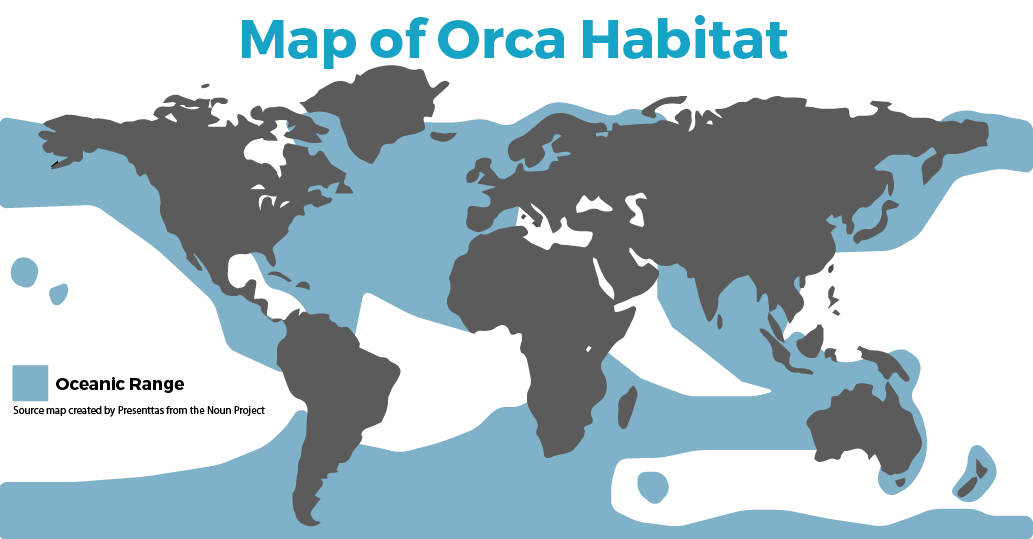

A small pod of orcas surfaces in the calm coastal waters of the Pacific Northwest, framed by forested shoreline and the snow-capped Cascade Range in the distance. Populations here, like the Southern and Northern Resident orcas, tend to stay close to coastlines where salmon runs are abundant, following predictable seasonal migrations tied to their prey. Their habitat choice is a direct reflection of behavior — resident pods rarely stray far from reliable fish stocks, while other ecotypes roam much further in search of marine mammals.
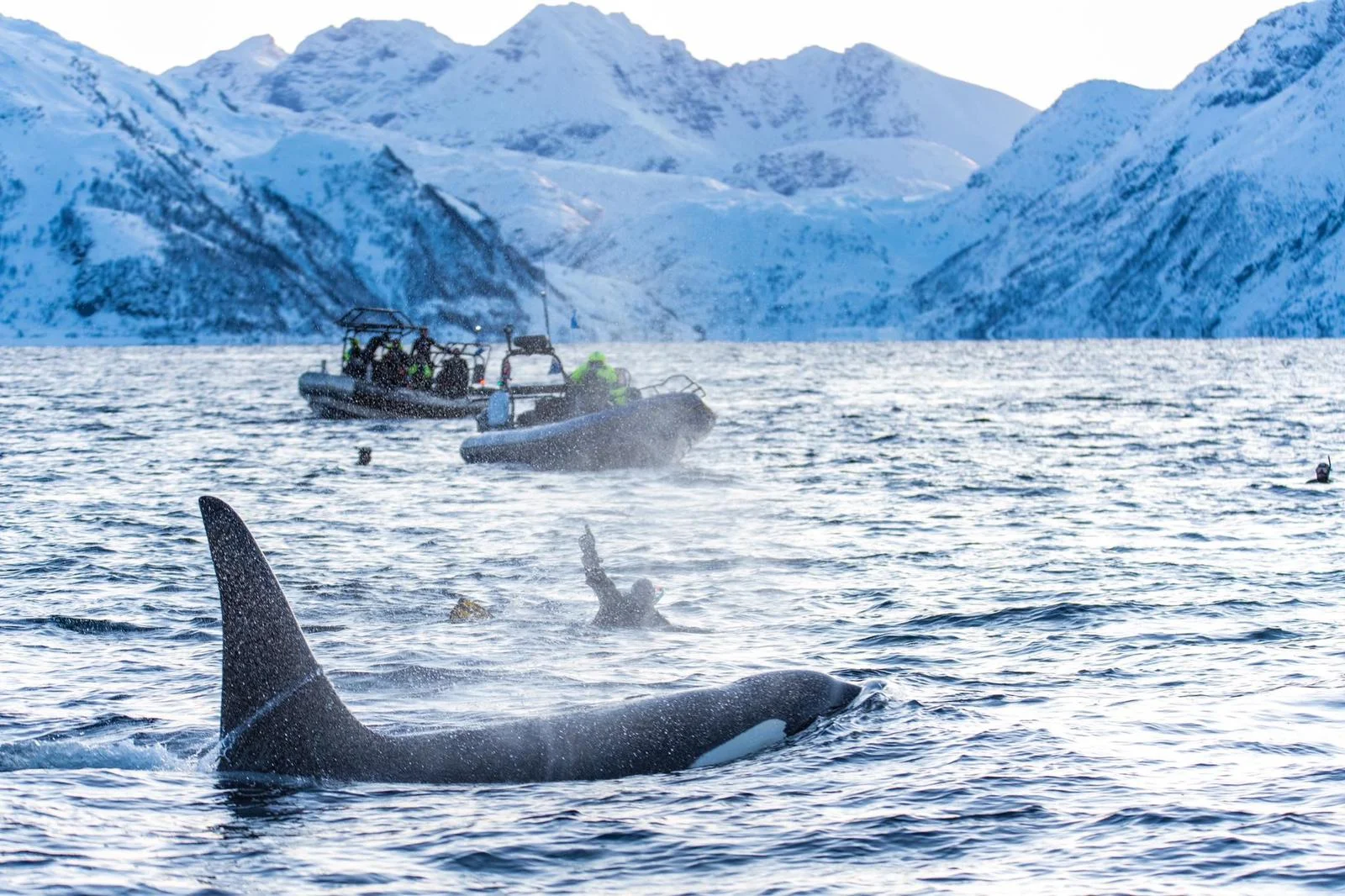
An orca surfaces close to snorkelers and support boats against the dramatic backdrop of Norway's snow-covered fjords. Each winter, orcas follow massive herring migrations into these cold northern waters, drawing both the whales and a growing wildlife tourism industry to the same narrow channels. This kind of close, non-aggressive interaction with humans in the wild reflects how orcas generally behave around people — curious and tolerant, rather than threatening, when not provoked.
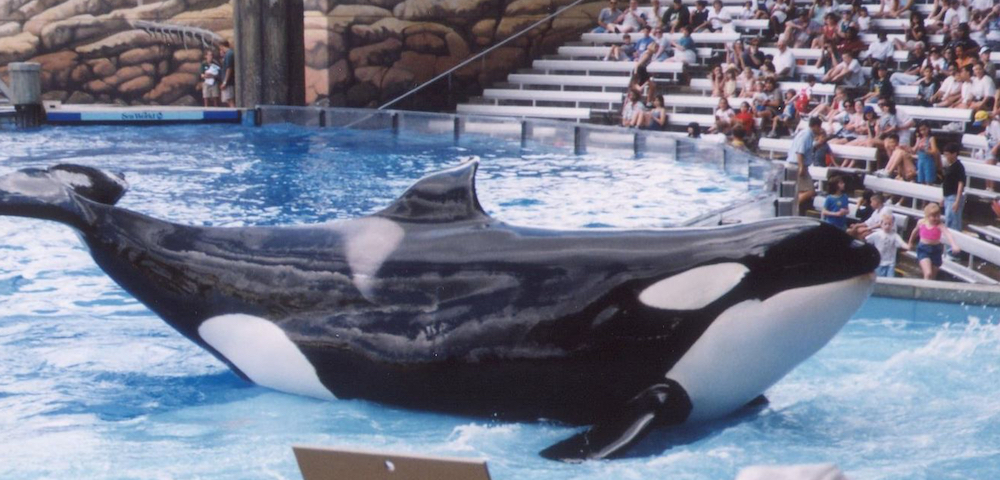
An orca performs in a concrete pool in front of an audience, a stark contrast to the open coastlines and fjords seen in the wild. Captive orcas live in a fraction of the space they would travel in the ocean — wild individuals can cover 100 miles or more in a single day — and this restricted environment has raised long-running questions among scientists and conservationists about the physical and psychological effects of captivity on such a wide-ranging, socially complex species.
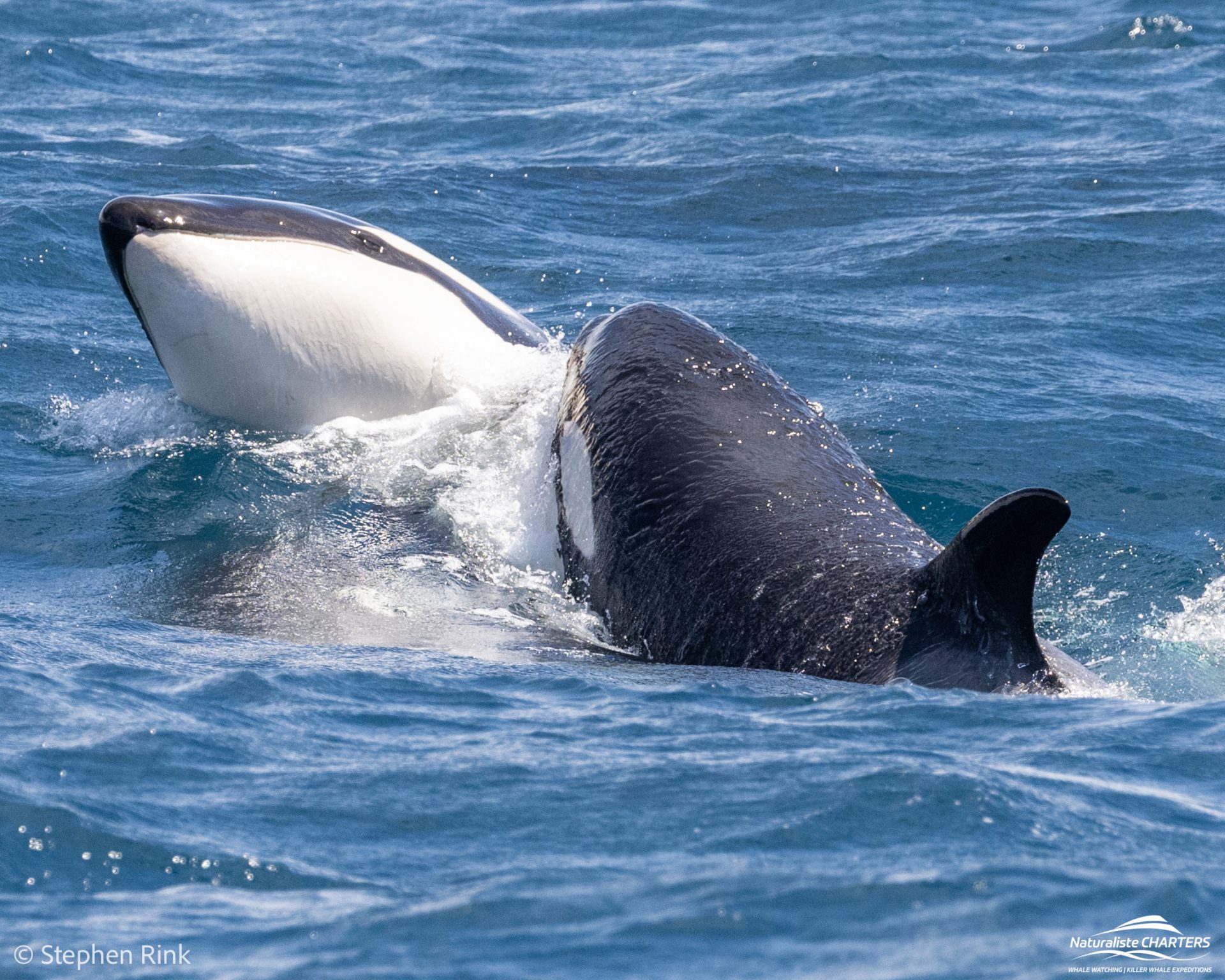
An orca lifts its head vertically out of the water in a behavior called spy-hopping, using its eyes to look around above the surface. Orcas do this to visually scan for prey, check for ice or obstacles, or simply observe their surroundings, including nearby boats. It's one of several distinct surface behaviors — alongside breaching and tail-slapping — that researchers use to study how orcas interact with their environment.